
Today, let's look at how cultural product marketing can break through — a single gift box did it with just one move
The hardest part of intangible cultural heritage products isn't making people aware of them — it's making them willing to give them as gifts. See how a Wuhu iron painting gift box uses packaging to translate cultural value into social currency.
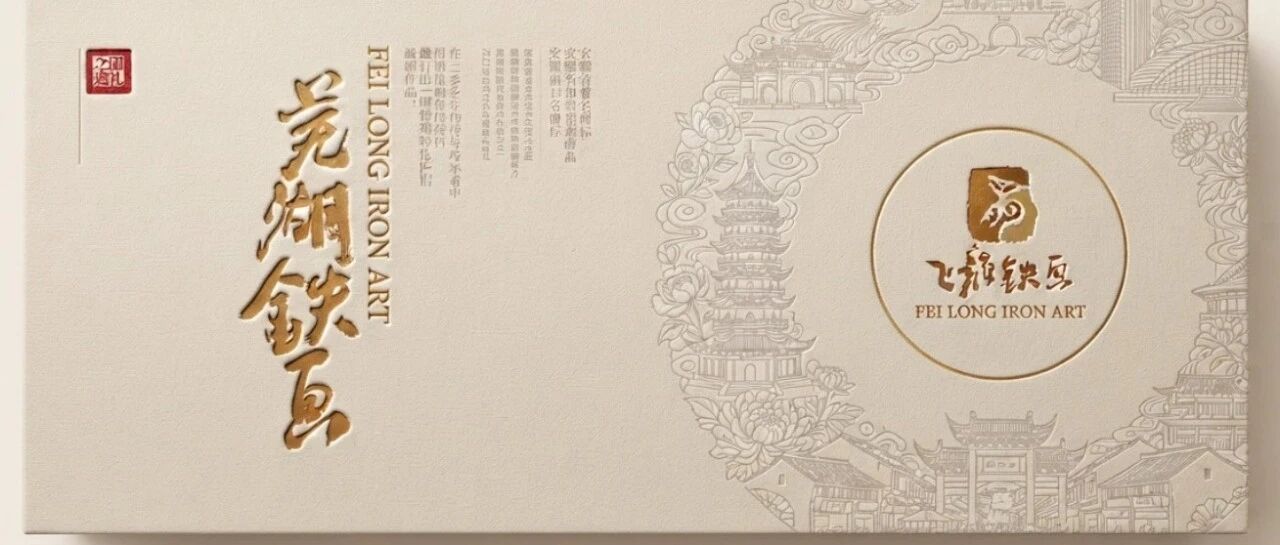
Local intangible cultural heritage, cultural specialty products—these “cultural products” are in a situation much like functional products: the goods are genuinely good, yet they struggle to enter consumers’ everyday conversation.
Everyone stops and marvels at the iron painting in the museum, but once it leaves the exhibition hall, no one talks about it anymore; the e-commerce detail page is filled with “national-level intangible cultural heritage, a century of inheritance,” and buyers swipe away after two flicks of the finger.
Why? Because the value hasn’t been translated.
The “cultural value” that cultural products care about most is hard to turn directly into a reason consumers are willing to pay for and willing to give as a gift. So for cultural products to break through, they must first answer one question:
How do you build an emotional connection with consumers beyond “value recognition”?
Recently, a gift box we made for Wuhu iron painting happened to open up this path. Let’s break it down and see how cultural products can use packaging to achieve a breakthrough.
01
01 Turn ordinary “iron” into a presentable “gift”
Iron painting is a traditional craft of Wuhu: iron as ink, anvil as paper, forging iron into painting. The craft itself carries great weight, but the word “intangible heritage” is too heavy—so heavy that consumers don’t know what to do with it.
Give it to someone? Afraid they won’t understand it. Keep it for yourself? It feels too solemn. The product is excellent, but between it and daily life, there’s a missing translation of “how you should use it.”
When making this gift box, we didn’t focus on “introducing how impressive iron painting is,” but translated it into a single line within the gifting scenario: “This is a gift with craftsmanship, with provenance, and presentable enough to give.”
So the entire design unfolds around the word “gift”: the book-style box is like a hardcover book—open it and there’s a collectible; the drawer box is like a desk object—pull it out and there’s a surprise.
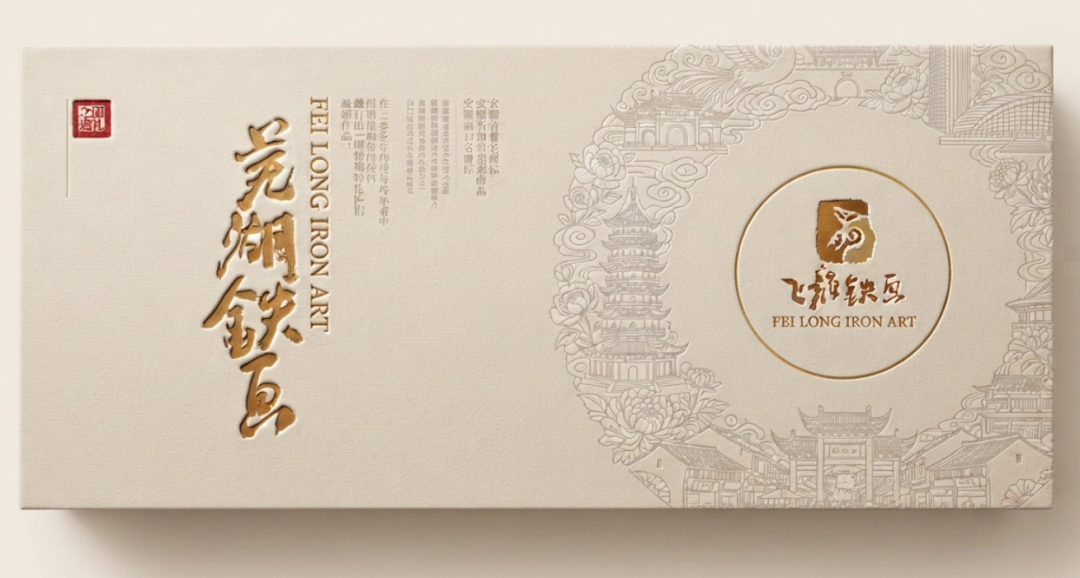
— The book-style gift box as a whole, a restrained composition of off-white ground and gold-foil calligraphy
What consumers receive is no longer an “intangible-heritage craft object,” but a “presentable gift.” The “iron” of the iron painting is still there, but the word “gift” speaks for it.
02
02 Precisely insight into the gifting scenario, letting culture speak for itself
Kotler said that real advertising isn’t about making an ad, but about getting the media to discuss your brand. For cultural products, the hardest part isn’t letting people know what you have, but getting them willing to “talk” about you—and the conversation scenario for a gift box is gifting.
The success of this gift box, we break down into three points:
A well-chosen “scenario.” Gifting is a high-frequency essential need for Chinese people: visiting relatives and friends, business exchanges, housewarmings and birthday celebrations. The iron painting gift box taps precisely into the collective anxiety of “what to give so as not to be rude.”
A “status” that holds up. Off-white specialty paper + gold foil + embossing, understated yet expensive; a black silk lining—open it like opening a collectible. The recipient knows at first glance: this wasn’t bought casually, it was carefully chosen.
“Culture” told clearly. The circular composition on the box surface uses line drawing to link Wuhu’s landmarks, painting the city’s story onto the box. The giver doesn’t need to say a word—the box tells its provenance on its own.
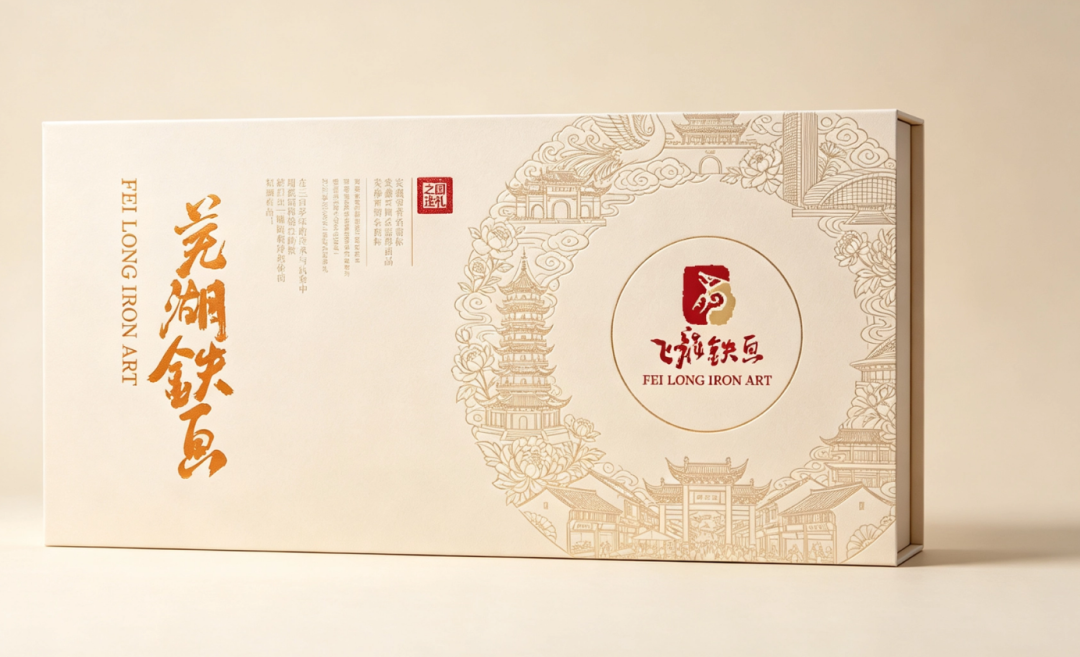
— Circular composition on the box surface, line drawing linking Wuhu’s landmark buildings
Culture doesn’t have to be aloof. When it’s placed into a box that “understands the scenario, conveys status, and tells a story,” it can speak for itself.
03
03 The creative starting point and endpoint are both the product, bringing marketing back to core value
The biggest taboo in marketing cultural products is packaging and product being two separate skins. What’s most worth breaking down about this gift box is this: craftsmanship isn’t decoration—it’s the “starting point” of the entire design.
The soul of iron painting is “iron”—bold strokes, mottled gold leaf. So the box surface uses embossing to simulate the iron painting’s three-dimensional strokes, uses gold-foil stamping to echo the iron painting’s metallic luster, and the tactile paper makes the whole box feel, when touched, as sinewy as the iron painting itself.
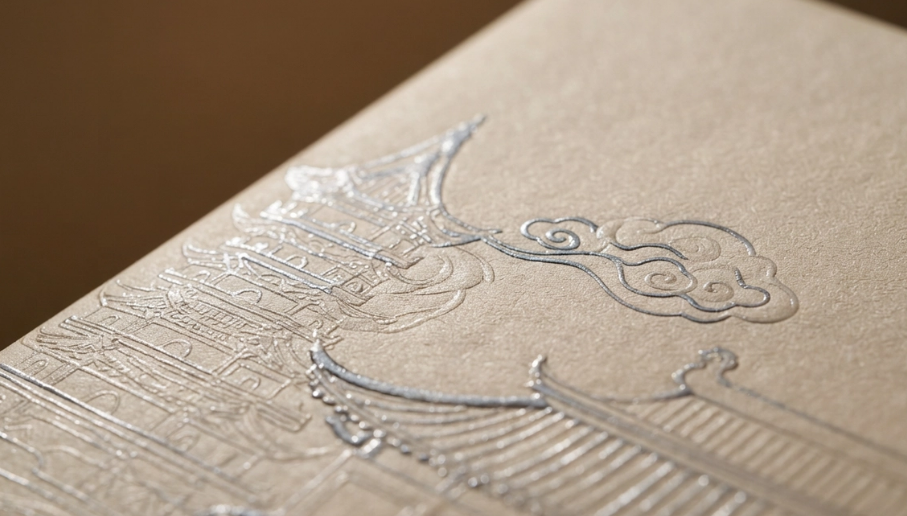
— Detail of silver-gray line-drawing embossing, the raised texture simulating iron painting strokes
Craftsmanship is likewise the design’s “endpoint.” Embossing, gold foil, silk lining—every detail answers the same question: “Is this gift worth receiving?”
When the recipient touches the raised strokes, sees the gleaming gold foil, and opens the black silk lining, cultural value needs no explanation—it lands on its own.
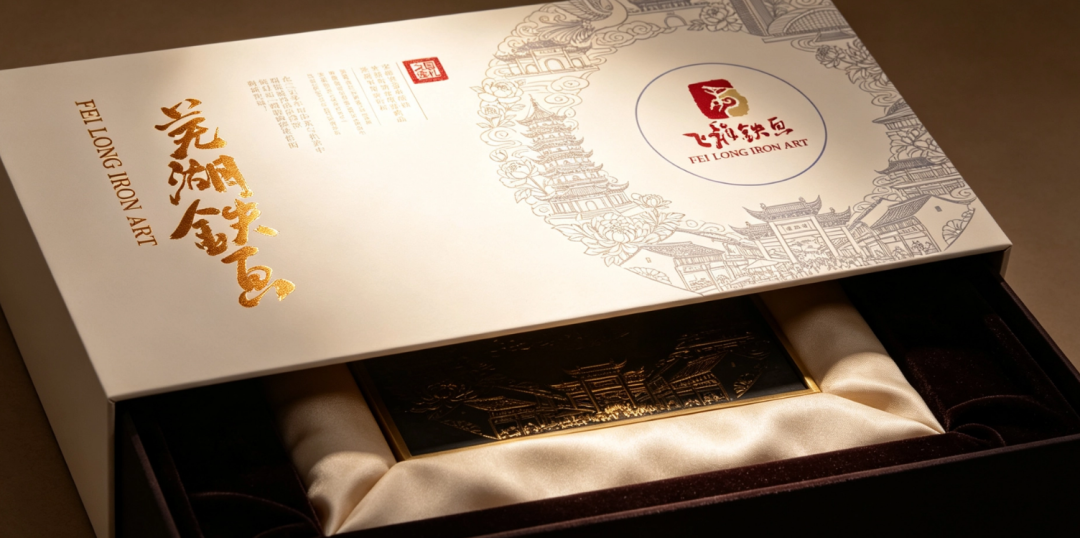
— The moment of unboxing, the black silk lining cradling the original iron painting
04
In closing
The hardest part of marketing cultural products isn’t letting users know what you have, but getting users willing to give you away.
What made this gift box work is that it found a single fulcrum between “intangible-heritage value” and “the gifting context”—“one hand each”: one hand the iron painting craft, one hand the gift box packaging.
It’s precisely because of this fulcrum that the gift box can bring intangible heritage from the exhibition hall into the living room, completing a “cognitive breakthrough” of value through gift after gift, and leaving this craft with long-lasting mindshare.
Most importantly, the endpoint of all packaging must return to the product itself, to that promise of craftsmanship—“iron as ink, anvil as paper.”
Good packaging speaks.
Sanyao Packaging
Good packaging speaks
About This Case: Quick Answers
Are finishing processes on packaging (foil stamping, matte lamination, etc.) worth it?
Spending a few dimes to a dollar more per bottle buys you a texture that lights up at a glance under the counter lights, and the gut feeling that "this bottle isn't cheap." Finishing isn't showing off technique—it's money spent to make consumers willing to believe it's worth the price, and that dollar comes back doubled in the selling price.
Can the gift box playbook in this article work for my gift box products too?
Yes. This logic doesn't discriminate by category—as long as your product sits on the shelf looking like everyone else's and consumers can't recognize you in three seconds, it works. When it comes to execution, we'll set a new plan based on your category, channel, and price band rather than forcing someone else's face onto yours.
If I hire you for gift box packaging, how do you usually charge, and how long does it take?
We charge per project, depending on category complexity, the number of series, and whether prototyping and extensions are included. Typically 2–4 weeks: week one sets direction and positioning, week two delivers the proposal, and weeks three and four deepen, prototype, and finalize. Rush timelines can be compressed, but we recommend leaving time for physical prototyping. Send us your materials for a free diagnosis first, then we'll quote.
We're in another city—can we work together online?
Yes. Many of our projects are remote collaborations: materials coordinated online, proposals reviewed in the cloud, and prototypes shipped by courier—no geographic limits, and we work with clients nationwide.
CommentsBe kind, communicate rationally