
Is today's food packaging design subtle or eye-catching? We made this guoba packaging "eye-catching"—the client was very skeptical, but the later sales results gave us a pretty good report card!
The guoba client was a very down-to-earth boss. When he came to me, he had just one request: no fancy frills, keep it grand. I said fine, but first let me ask you: your
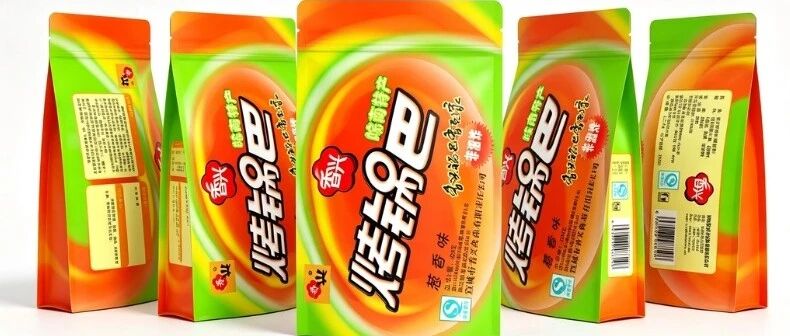
The client making guoba (crispy rice snacks) was a very down-to-earth boss. When he came to me, he had just one request: don’t do all that flashy, fancy stuff — it needs to be grand, like award-winning work, with a level of refinement worth appreciating.
I said fine, but first let me ask you: where does your guoba sell?
He said supermarket shelves, plus small corner shops.
I said then it has to be “flashy.”
He got anxious: why are you doing the opposite? I said flashy is a derogatory word, but flashy on the shelf is called “eye-catching.”
Think about it — guoba sits on the same row of shelves as potato chips, biscuits, and latiao (spicy strips). When a customer walks by and scans the shelf, their eyes don’t linger for more than three seconds. If your packaging is grand, plain, and tasteful, it’s invisible on the shelf; if it’s bold and grabby, the customer can fish it out at a glance. In the shelf business, the first battle is about “being seen.”
What we ended up making: a high-saturation orange-to-green gradient with clashing colors, glossy plastic composite film bright enough to reflect light; the product name “烤锅巴” (Roasted Guoba) on the front in three-dimensional type with black outlines, popping out like a barrage of comments; and a small red tag beside it reading “非油炸” (Non-Fried).
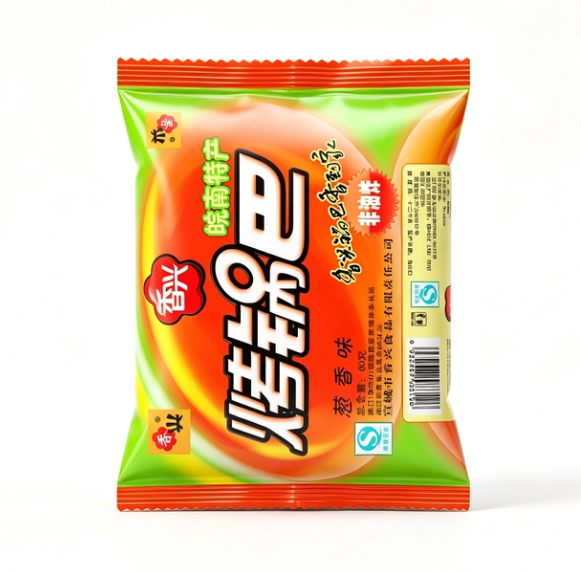
— Orange-green gradient packaging front display
When the client got the sample, his face turned green: this color scheme is way too tacky, isn’t it? Looks like street-stall goods.
I said don’t rush to curse me — find a supermarket, put it on the shelf, and stand ten meters away to look.
He actually went. When he came back, his attitude had changed: seems like… it really is the most noticeable one.
I said exactly. The difference between street-stall goods and a shelf bestseller isn’t about who’s more “upscale” — it’s about who “fits.” Your guoba sells for 6 yuan a bag, and your target customers are students and young people binge-watching shows. What they want isn’t a sense of luxury — it’s the urge to “want to eat it just by looking.” Put that orange-green clash right there, and you can see it from two rows of shelves away — and that urge kicks in.
We deliberately chose that high-gloss film — the printed saturation gets boosted, and under the lights the whole bag shines. The client said it costs a bit more than ordinary film, over a dime. I said that dime buys you that half-second on the shelf.
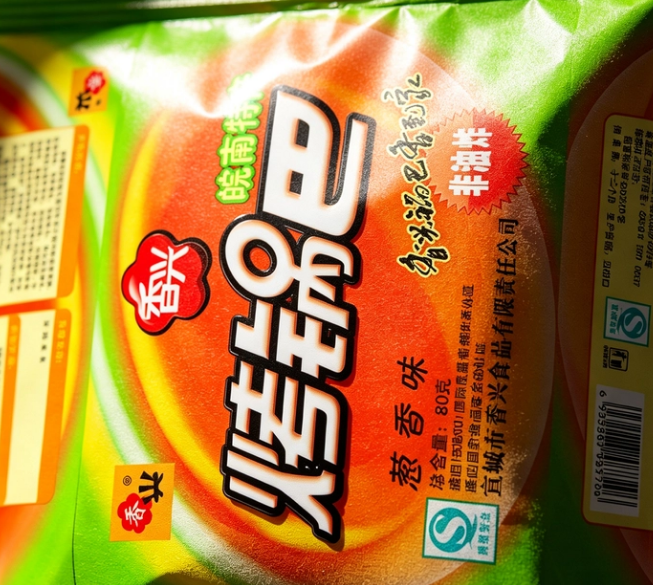
— Close-up of high-gloss printing on the packaging surface
Later he asked me again: should we put some health concepts on the packaging? No additives, traditional craft, that sort of thing.
I said don’t. People buying guoba are thinking “what can I munch on while binge-watching,” not “today I’m going to eat healthy snacks.” Tell them no additives and they go “oh”; tell them “crunchy and crispy” and their mouth waters. Ninety percent of a purchase is emotion making the first move — reason just helps find an excuse afterward.
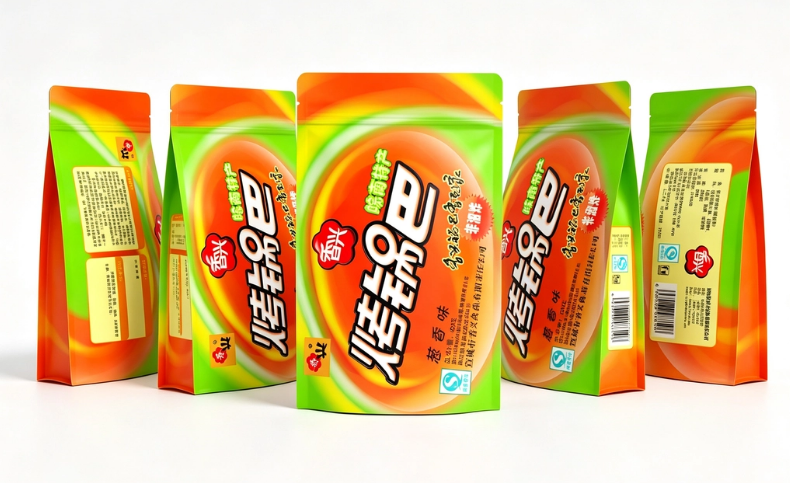
— Scattered guoba after opening the bag
This reminded me of a principle: in marketing, the biggest taboo is “educating the user.” No matter how good your product is, don’t corner the customer and lecture them. If the customer dreads hassle, save them the trouble; if the customer fears choosing wrong, let them recognize it at a glance; if the customer wants to be happy, serve up the “happy” right in front of them first.
Doing business by following human nature is a hundred times less effort than shouting slogans at human nature.
Often clients see the packaging I create based on the traits of the consumer group and say, this packaging is too tacky, and so on.
I say don’t — those two curses you throw at me are nothing compared to the goods sold.
Sanyao Packaging
Good packaging speaks.
About This Case: Quick Answers
How exactly does a product get "seen" on the shelf?
Consumers give you only three seconds in front of the shelf. The most reliable approach works on two levels: from three meters away, color and shape grab attention; within one meter, information and cultural trust signals stop people in their tracks. The root cause of most products not selling isn't that they're bad—it's that the "good" never manages to shout from three meters away.
Can my food product use this "eye-catching" approach too?
Yes. This logic doesn't discriminate by category—as long as your product sits on the shelf looking like everyone else's and consumers can't recognize you in three seconds, it works. When it comes to execution, we'll build a fresh plan around your category, channel, and price tier rather than forcing someone else's face onto yours.
What do you typically charge for food packaging, and how long does it take?
We bill per project, based on category complexity, the number of SKUs, and whether prototyping and extensions are included. Standard timeline is 2–4 weeks: week one sets direction and positioning, week two delivers concepts, and weeks three and four refine, prototype, and finalize. Rush schedules can be compressed, but we recommend leaving time for physical prototyping. Send us your materials for a free diagnosis before we quote.
We're based elsewhere—can we work together online?
Absolutely. Many of our projects are remote collaborations: materials shared online, concepts reviewed in the cloud, prototypes shipped by courier. There are no geographic limits—we work with clients nationwide.
CommentsBe kind, communicate rationally