
Case Study: Inner Mongolia Beef Jerky Packaging Design — The Tighter the Budget, the Closer Packaging Must Stick to Business Goals
A while back I read a 2026 China marketing trends report, and one number stuck with me: among domestic brand owners, only 19.1% still use \x26quot;a single agency to handle everything
A while back I read a 2026 China marketing trends report, and one number stuck with me: among domestic brand owners, only 19.1% still use the “one agency does everything” model. The other 80% split the work up and hire different specialist teams.
For a small team like ours that does packaging design, this is actually good news. In the past, clients came to us wanting to “get the materials done along the way”; now clients come to us specifically for this one problem: packaging. The narrower the goal, the easier it is to do one thing thoroughly.
The report had another data point: 66% of brand owners prioritize social media and content marketing when budgets tighten. Many people see that and think, “so packaging doesn’t matter anymore.” I think it’s exactly the opposite — that image on social media is a photo of the packaging. Packaging is part of the content; it’s the face that gets “shown off.”
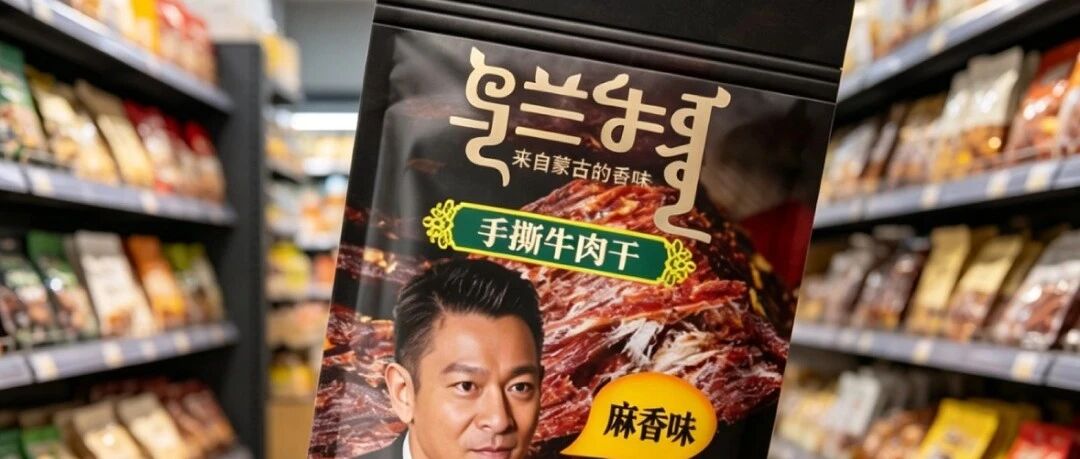
Recently we did packaging for a beef jerky product. The client is from Inner Mongolia, and the product itself has real substance: good meat, traditional craft, regional character. We didn’t take the usual “snack-y” route. Instead we did a version in ethnic-style black and gold — bold, commanding, like a proper gift.
The bag is a matte black stand-up pouch that stands firm on the shelf without slumping. The front is anchored by gold Mongolian script, paired with the words “Hand-Torn Beef Jerky,” and beside it hangs a colorful flavor tag — “Mala Spice” — like a brooch pinned to the product. The spokesperson’s photo is printed on the front; one face is one endorsement: this beef jerky has pedigree.
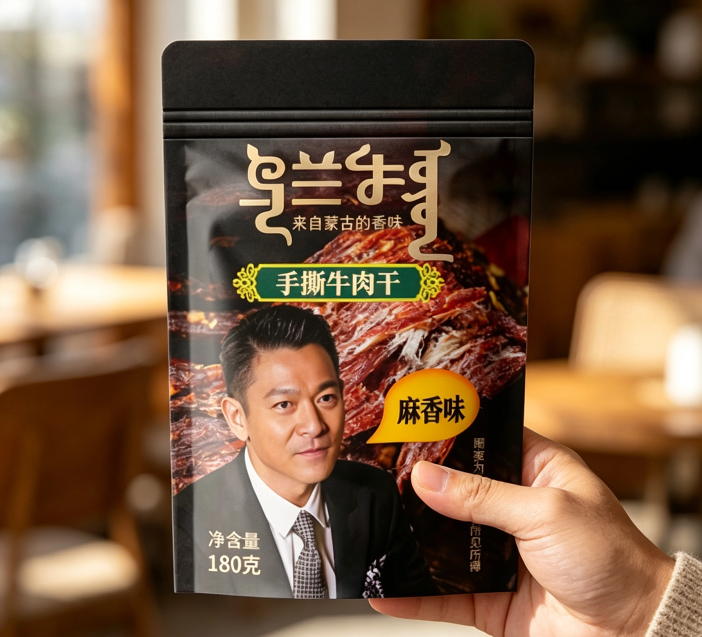
— Hand-held display of the matte black bag
We added a tear notch at the top of the bag and a round hole above it for supermarket peg hooks. These little things aren’t flashy, but whether it tears easily and hangs well on the hook — it’s all part of the experience score.
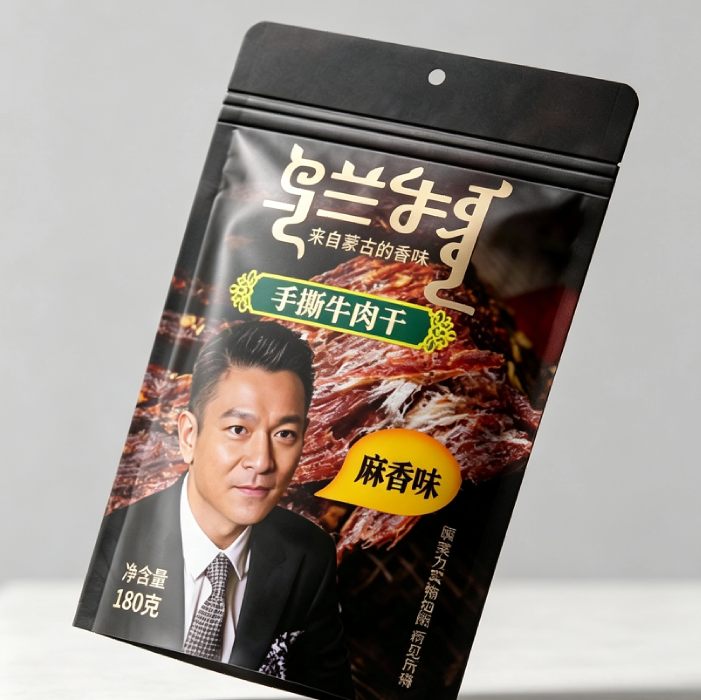
— Detail of the top tear notch and hanging hole
Why this choice? Because the client’s real business goal isn’t “sell a few more packs of snacks” — it’s “sell good stuff nationwide.” The packaging has to live up to that goal — it has to make a stranger seeing it on a phone screen feel that “this thing has pedigree.”
The most common line in the feedback after the first version was “it looks real.” That comment is worth more than any design award.

— Group display of multiple versions on stepped wooden platforms
So I think when budgets are tight, marketing moves should hew even closer to business results. Whether packaging can help a product articulate its value and earn trust on a screen — that’s far more concrete than the word “good-looking.”
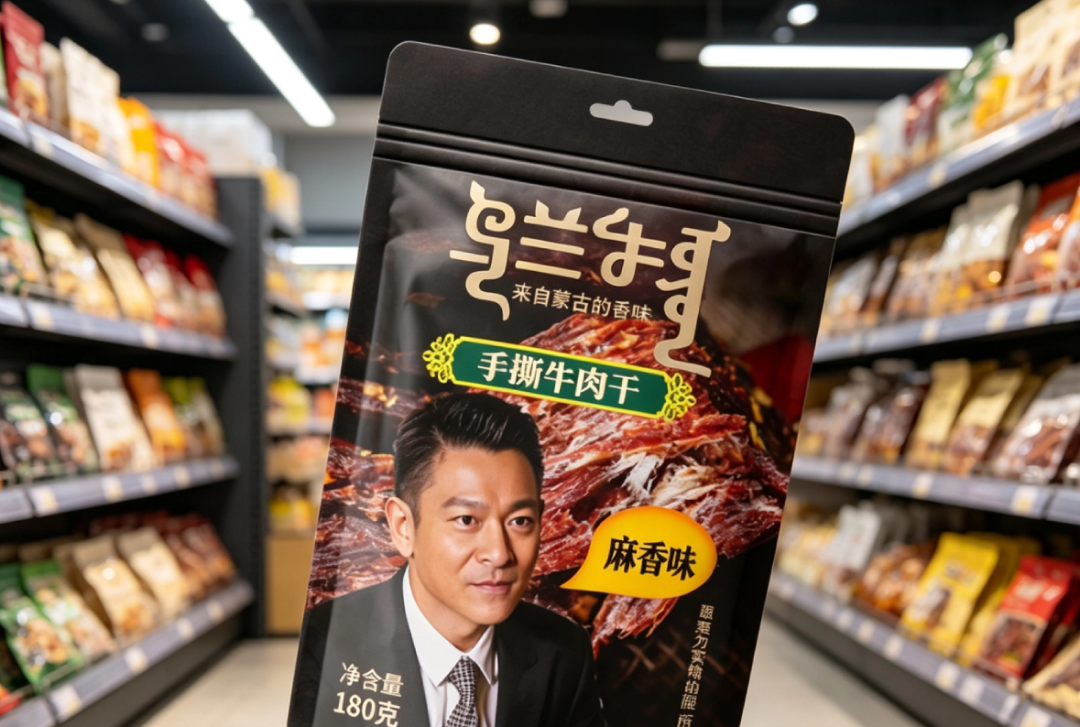
— Actual shot of supermarket shelf display
Spend your money where it counts — and where it counts is your most important business goal.
Sanyao Packaging
Good packaging speaks.
About This Case: Quick Answers
My product is good, but why should consumers believe it?
Trust is grown, not shouted. Break trust down into visible details: real ingredients, restrained claims, traceable symbols of origin. The less you boast about a feature, the more buyers reach the conclusion on their own that "this thing is reliable."
Can my product use the product approach described in this article?
Yes. This logic doesn't discriminate by category—it works as long as your product looks much like everyone else's on the shelf and consumers can't recognize you in three seconds. When it comes to implementation, we'll redefine the plan based on your category, channel, and price band rather than forcing someone else's face onto yours.
If we hire you for product packaging, how do you usually charge, and how long does it take?
We charge per project, depending on category complexity, the number of series, and whether prototyping and extensions are included. Typically 2–4 weeks: the first week sets direction and positioning, the second week delivers concepts, and the third and fourth weeks deepen, prototype, and finalize. Rush jobs can be compressed, but we recommend leaving time for physical prototyping. Send us your materials for a free diagnosis before we quote.
We're in another city—can we collaborate online?
Yes. Many of our projects are remote collaborations: materials coordinated online, concepts reviewed in the cloud, prototypes shipped by courier—no geographic limits, and we work with clients nationwide.
CommentsBe kind, communicate rationally