
What should packaging design for processed agricultural products look like? Let's explore this through a persimmon vinegar packaging design case.
The owner of a persimmon vinegar brand came to me, and the first thing he said was: make me a packaging that makes people want to buy it at first glance. I said sure, but first let me ask: is your vinegar sweet or sour?
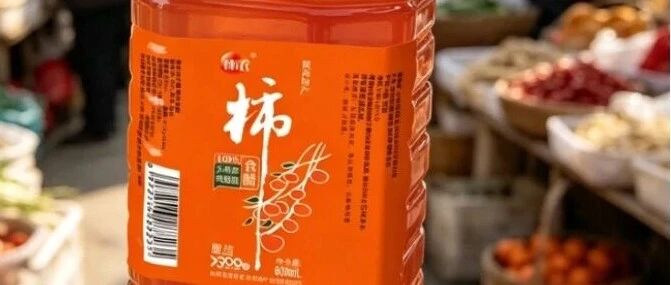
This persimmon vinegar is a specialty from Shaanxi, made without industrial fermentation. When we talked with the client, we learned something: aren’t the people who buy persimmon vinegar after that pure, genuine fruity tartness rather than “sweetness”? They buy persimmon vinegar for that authentic fruity acidity—to brighten cold dishes, to dip dumplings, to lift the flavor. If you write “sweet and tangy,” customers take it home, taste it, and pucker at how sour it is—they’ll feel you lied to them. But if you honestly write “Original fruit vinegar, mildly tart, flavor-enhancing,” customers taste it and go, oh, that’s exactly the flavor—and that’s what we mean by matching up. So honest, truthful presentation—product information and characteristics—is a really important point.
Later we settled on the plan: a transparent bottle with a handle, food-grade PET, like the kind used to fetch vinegar back home—grab it and go, and it feels familiar; a red-and-white screw cap that’s easy to twist open; an orange label with a calligraphic “柿” (persimmon) character front and center, paired with an illustration of the fruit, and small text below reading “Original fruit vinegar · mildly tart, flavor-enhancing.” It’s eye-catching and highly recognizable—people can spot and identify it from far away.
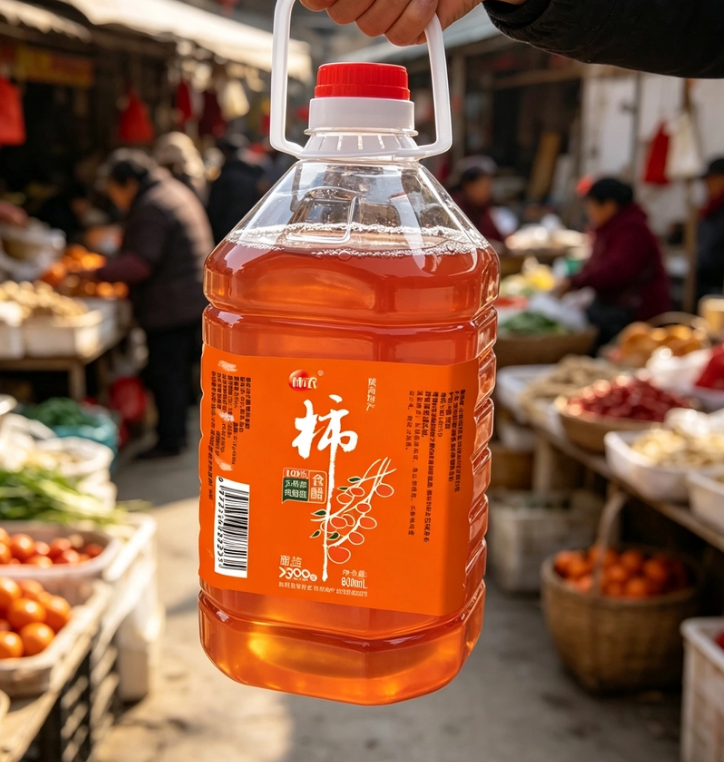
— Transparent handled bottle, outdoor purchase scene
At the time the client also disliked the word “mildly tart”—I persuaded him: these two words help you filter out the wrong customers, and everyone left is a repeat
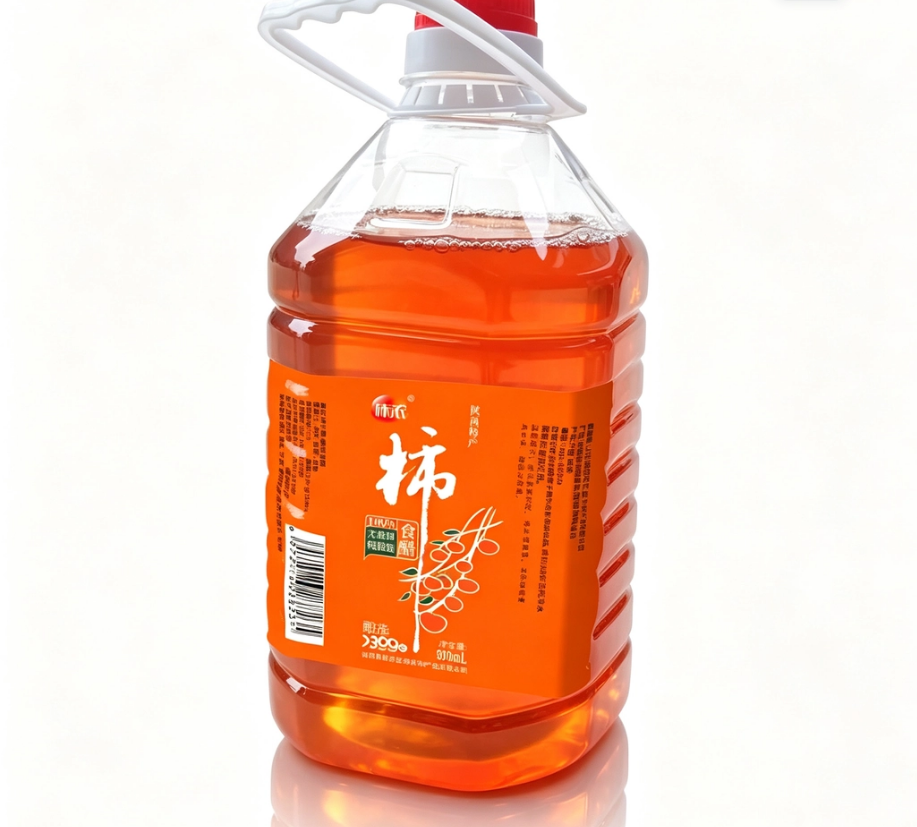
— Horizontal anti-slip ridges on the bottle
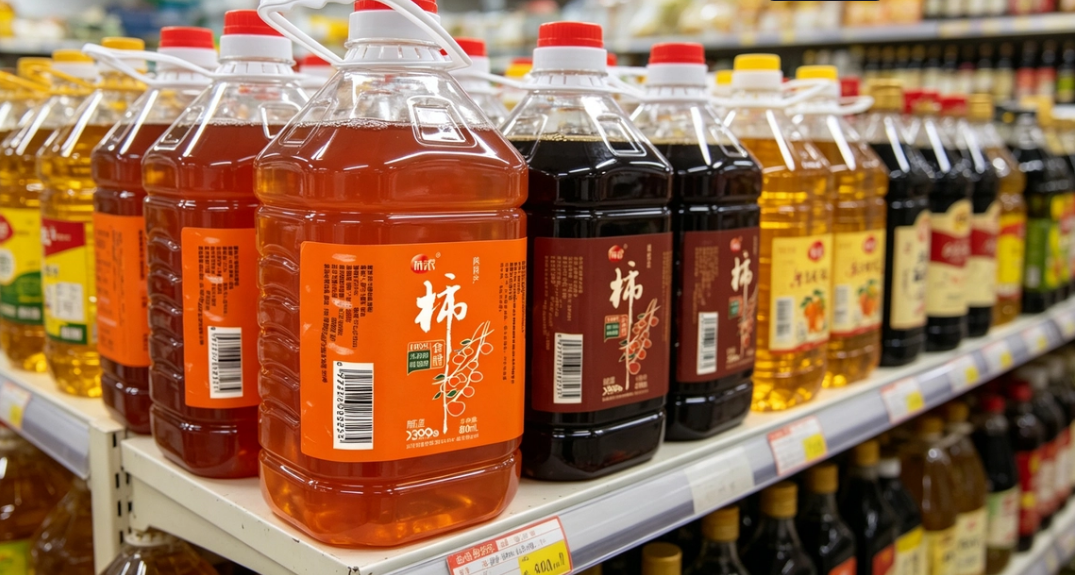
— Real shot of multi-size display on a supermarket shelf
Looking back, I realize this is actually very simple: in business, the most expensive cost isn’t raw materials—it’s customer trust. Cheat someone once, and they remember it for life, and they get the people around them to remember it too. Be honest once, and they trust you for life, and they tell everyone about you.
So in our design work, we never urge clients to overstate. If the product is sour, write sour; if it’s salty, write salty; if the process has limitations, state the limitations plainly.
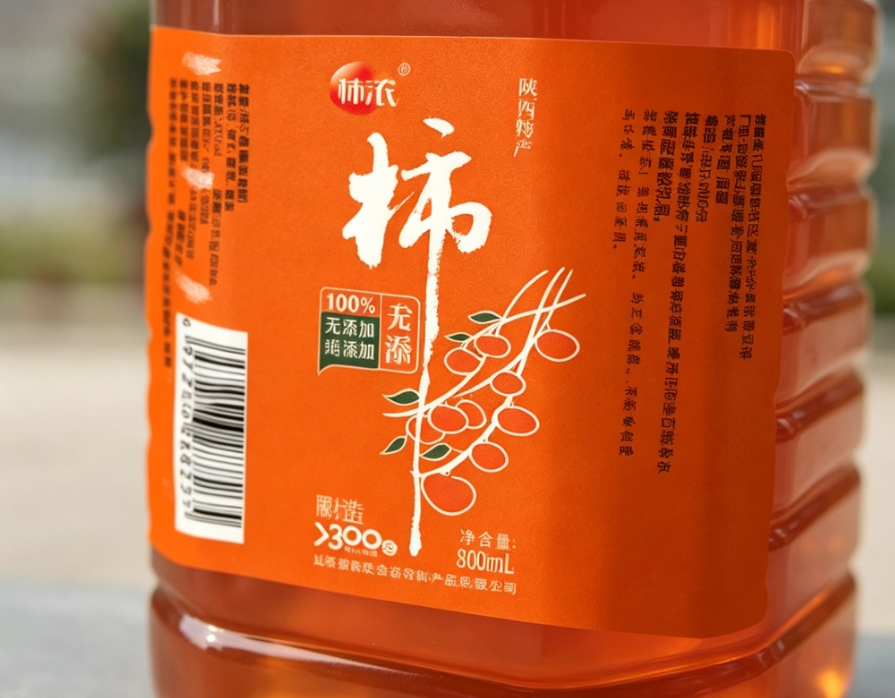
— Label close-up with the 100% pure-brewed mark
On the packaging of deep-processed farm produce—packaging, after all, is the “self-introduction” between a product and its customer. You want people to recognize you easily; you explain yourself clearly, and they feel you’re reliable.
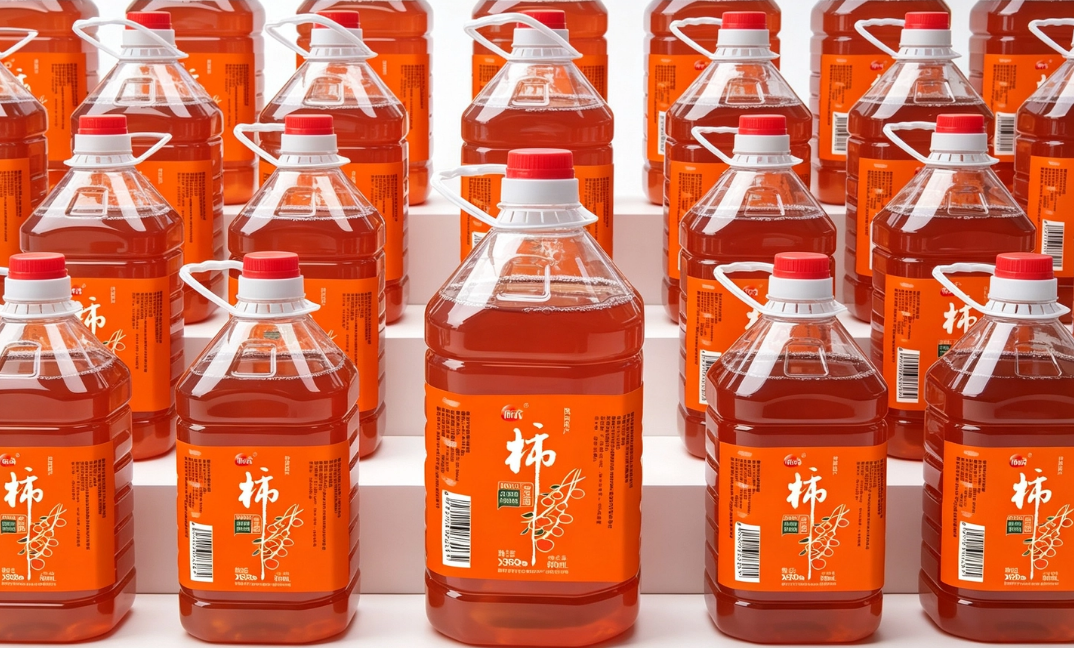
— Orange-label product matrix display
It’s like a blind date: if you show up boasting you’re as handsome as Pan An, they block you after one meeting; but if you openly say “I’m not tall, but I cook well,” they’re actually willing to give it a try.
Business works the same way. One more word here: when using this vinegar, use wooden utensils—never let it touch metal spoons or the like.
Sanyao Packaging
Good packaging speaks
About This Case: Quick Answers
My product is good, but why should consumers believe it?
Trust is grown, not shouted. Break trust down into visible details: real ingredients, restrained claims, traceable symbols of origin. The less you boast about a feature, the more buyers reach the conclusion themselves that "this thing is reliable."
Can my product use this "it clicks" approach too?
Yes. This logic doesn't discriminate by category—as long as your product sits on the shelf looking like everyone else's and consumers can't recognize you in three seconds, it works. When it comes to execution, we'll set a new plan based on your category, channel, and price band rather than forcing someone else's face onto yours.
If we hire you for product packaging, how do you usually charge, and how long does it take?
We charge per project, depending on category complexity, the number of series, and whether prototyping and extensions are included. Typically 2–4 weeks: the first week sets direction and positioning, the second week delivers the proposal, and the third and fourth weeks deepen, prototype, and finalize. Rush jobs can be compressed, but we recommend leaving time for physical prototyping. Send us your materials for a free diagnosis before we quote.
We're in another city—can we collaborate online?
Yes. Many of our projects are remote collaborations: materials coordinated online, proposals reviewed in the cloud, prototypes shipped by courier. There are no geographic limits—we work with clients nationwide.
CommentsBe kind, communicate rationally