
Have you noticed that livestream e-commerce has cooled off? So how do brands sell for profit? Getting back to the product and back to consumer needs is the only way!
As livestream selling cools off, brands are shifting budget from the livestream room back to the shelf, and the key metric is changing from GMV to profit. As the first salesperson on the shelf, how can packaging catch this shift through recognition, a sense of value, and new-category education? Let's talk it through with two real-world cases: tiger nut oil and a baijiu gift box.
Q: Now that livestream selling has cooled off, is “looking good” still the main focus when brands do packaging? A: No, it isn’t. The biggest change this year is that brands are moving budget from livestream rooms back to the shelf, and switching their KPI from GMV to profit. As the first face on the shelf, packaging now has a much bigger say than before.
01
Selling well doesn’t mean earning well
A few years back everyone was racing on influencer livestreams. After sinking money into slot fees plus commissions, sure, product moved — but when you did the math afterward, the return rate crept up and profit got eaten clean. This year a lot of bosses have changed their thinking: get the numbers straight first, pull the product lineup and budget back to the flagship store, and make money off the store’s organic conversion rate.
The data isn’t on livestream’s side either. After some brands wrote return rate into their operating metrics, they found that for every 10-percentage-point drop in return rate, channel net margin could recover three to five points — that’s the core reason many brands are betting on the shelf again.
02
The new faces of growth have changed
At the same time, the dark horses of growth have changed generation: it’s not old bestsellers on discount, but new products and new category tracks. Apparel orders are concentrating toward brands that value original design, while snacks are held up by high-frequency repeat purchase plus quality upgrades.
Put plainly, consumers are willing to pay for “visible value” — but the precondition is that they have to see it on the shelf first.
03
Packaging has to catch three things
Down to our line of work in packaging, this wave of change maps to three things.
The first is shelf recognition. On livestream the host can pitch for you; on the shelf no one pitches for you. Packaging must let customers recognize the category from three meters away and read the value within one meter.
The second is that a sense of value props up the price. Livestream closes deals on the lowest price; the shelf closes deals on “this money is well spent” — packaging has to establish that sense of class first.
The third is new-category education. Customers are afraid to try new things; packaging has to answer for them first: “what is this, and is it worth a try?”
04
Case one: tiger nut oil — how a new category gets people to dare to try
We did a project for tiger nut oil. At first the client wanted to go with a conventional white bottle, afraid the market wouldn’t accept something new. We persuaded him to make the bottle an irregular shape, deep blue with gold, and once the gift box hit the shelf, set beside a row of transparent-bottle cooking oils, the difference jumped out immediately.
The biggest challenge for a new category isn’t that it’s not good to use — it’s that customers don’t dare try it. What packaging has to do is lower the psychological threshold for the first order: make it look like serious premium goods, so trying it once isn’t a loss. So the irregular bottle, the blue-and-gold palette, the gift box — all of it serves this one purpose.
We also hit a snag during prototyping. The first version of the deep blue glass bottle came out murky, like a soy sauce bottle, and we spent three days re-tuning the color cards before settling on the current blue. That detail reminded me: one shade off in the color number means a whole notch off in shelf presence.
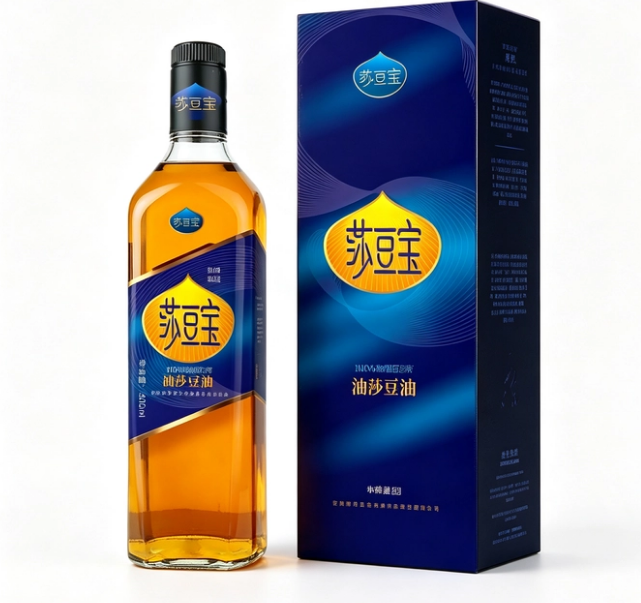
— Tiger nut oil irregular bottle, actual photo
05
Case two: yellow rice wine gift box — how a mature category props up average order value
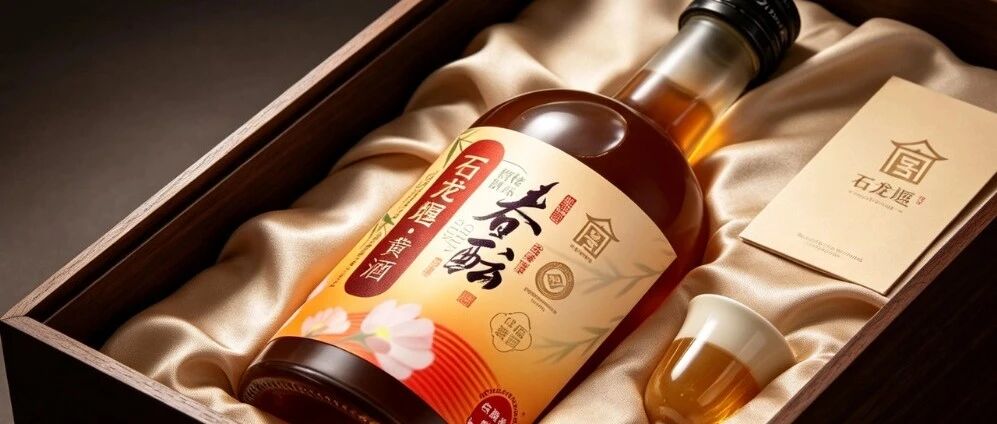
Another type is mature categories, like yellow rice wine. Yellow rice wine doesn’t lack recognition; what it lacks is a sense of value. We did a yellow rice wine gift box for a client who wanted something presentable to give away.
We didn’t pile on gold foil. Instead we used a deep brown round bottle with a classical calligraphy label, and a dark outer box with a silk lining. Costs stayed under control, and the moment you open the box, the sense of class is there.
This case taught me one thing: a sense of value doesn’t come from piling on materials — it comes from structure and the right materials.

— Yellow rice wine gift box, wooden box with silk, actual photo
06
Three very concrete suggestions for bosses planning new products right now
-
Decide the channel first, then do the packaging. Livestream versions, supermarket versions, gift box versions — the logic is completely different. Don’t try to conquer the world with one set of packaging.
-
Subtract on craft. One right craft is more premium than five piled on, and it’s easier to control cost — distributors won’t wince when they push it.
-
Dare to make information trade-offs in packaging. Keep one selling point, hide the rest on the back. Five seconds on the shelf is only enough for customers to understand one thing.
Lately a lot of clients are planning next spring’s new products. If you’re also wondering “where exactly does my category lose on the shelf,” take a photo of your current packaging and send it to us. We’ll run a five-second shelf test for you and see whether your packaging is catching this wave of business moving from the livestream room back to the shelf.
Yisanyao Packaging Design, focused on new-product packaging and full brand programs in the food, baijiu, and health-supplement tracks.
Sanyao Packaging
Good packaging speaks.
About This Case: Quick Answers
How exactly does a product get "seen" on the shelf?
Consumers give you only three seconds in front of the shelf. The most reliable approach is to design on two levels: at three meters, grab attention with color and shape; at one meter, stop people with information and cultural trust signals. The root cause of most products that don't sell isn't that they're bad — it's that the "good" never gets shouted out from three meters away.
The baijiu playbook in this article — can it work for my baijiu product too?
Yes. This logic doesn't discriminate by category — as long as your product looks like everyone else's on the shelf and consumers can't recognize you in three seconds, it applies. When it comes to execution, we'll set a new plan based on your category, channel, and price tier rather than forcing someone else's face onto yours.
If I hire you for baijiu packaging, how do you usually charge, and how long does it take?
We charge per project, based on category complexity, number of series, and whether prototyping and extensions are included. Typically 2–4 weeks: week one sets direction and positioning, week two delivers concepts, and weeks three and four refine, prototype, and finalize. Rush timelines can be compressed, but we recommend leaving time for physical prototyping. Send us your materials for a free diagnosis first, then we'll quote.
We're in another city — can we work together online?
Yes. Many of our projects are remote collaborations: materials coordinated online, concepts reviewed in the cloud, prototypes shipped by courier — no geographic limits, and we work with clients nationwide.
CommentsBe kind, communicate rationally