
A baijiu made from Northeast chestnuts is inherently differentiated and highly gifted—so why can't it sell a premium feel? Let's have the packaging design report first.
In the baijiu category, there's a hierarchy of snobbery: baijiu is the big boss, wine is fancy, and beer is down-to-earth. But a "regional specialty liquor" like chestnut wine finds itself in the most awkward position of all.
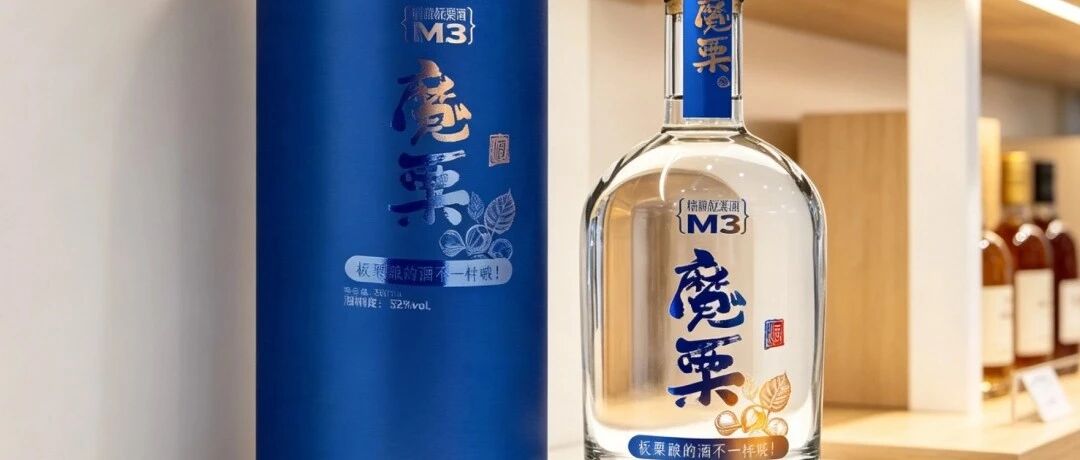
In the liquor category, there’s a hierarchy of snobbery: baijiu is the big brother, wine is the classy one, beer is the down-to-earth one. And “regional specialty liquors” like chestnut liquor find themselves in the most awkward spot of all—call it liquor, and it doesn’t have baijiu’s prestige; call it a beverage, and it still has alcohol content. Most chestnut liquors end up as “that one bottle nobody asks about in the local specialty counter.”
Today’s case is here precisely to break that hierarchy. The brand is called “Molì,” a liquor brewed from chestnuts. After looking through its eight product photos, I found it doing something especially bold: redefining chestnut liquor using the playbook of high-end gift boxes. And it succeeded.
01
Step one: At first glance, it doesn’t look like “local specialty produce”
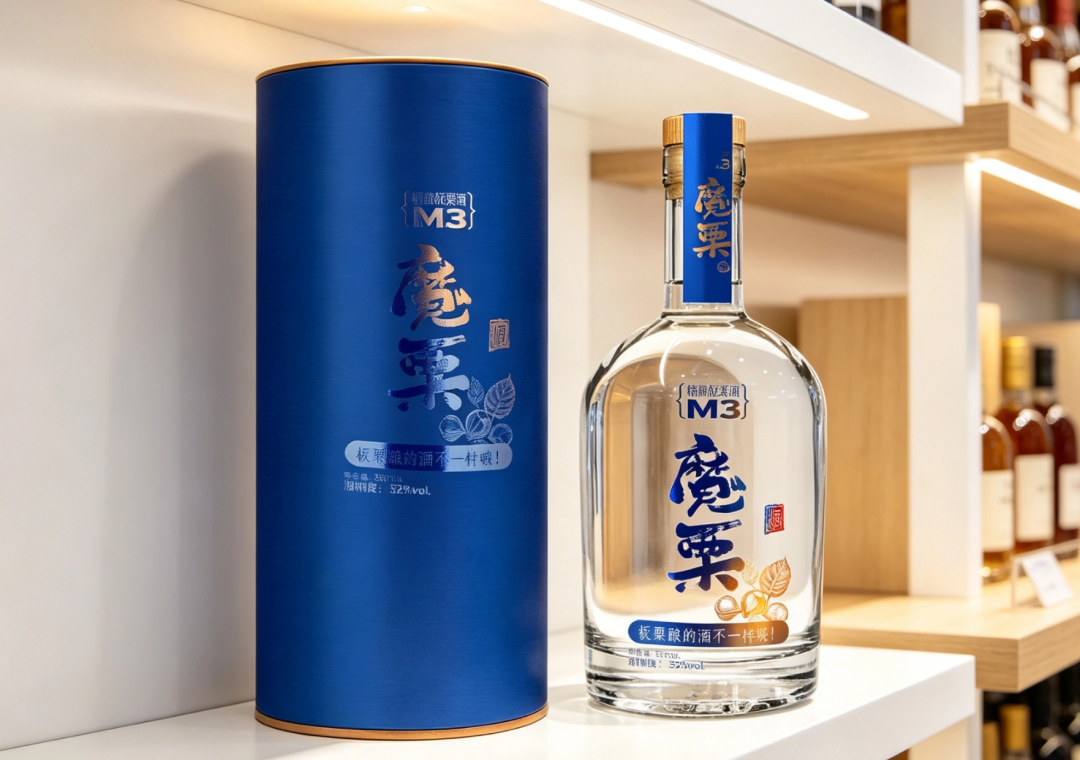
— Molì M3 - Cylindrical Gift Box
First, the packaging. A deep-blue cylindrical gift box with a metallic finish, a bottle cap decorated with wood-grain texture, a frosted-glass bottle body, and gold elements running throughout. Honestly, this set wouldn’t look out of place on a shelf of high-end foreign liquor.
Here’s a cognitive trap: most owners making regional liquor always feel that “I’m a local specialty, so I should make it more rustic, with a hometown flavor.” The result is a table full of regional liquors where anyone looking at them thinks, “This is a souvenir to bring back for the elders,” not “I want to pour myself a glass.”
Molì does the opposite—it doesn’t emphasize “rustic,” it emphasizes “quality.” Deep blue plus gold is the most classic “premium” color scheme in spirits; the cylindrical metal box is a gift-box structure commonly used for whiskey and brandy. It pulls “chestnut liquor” straight out of the local-specialty lane and into the “refined drink” lane.
02
Step two: One line turns “chestnut” into a memorable hook
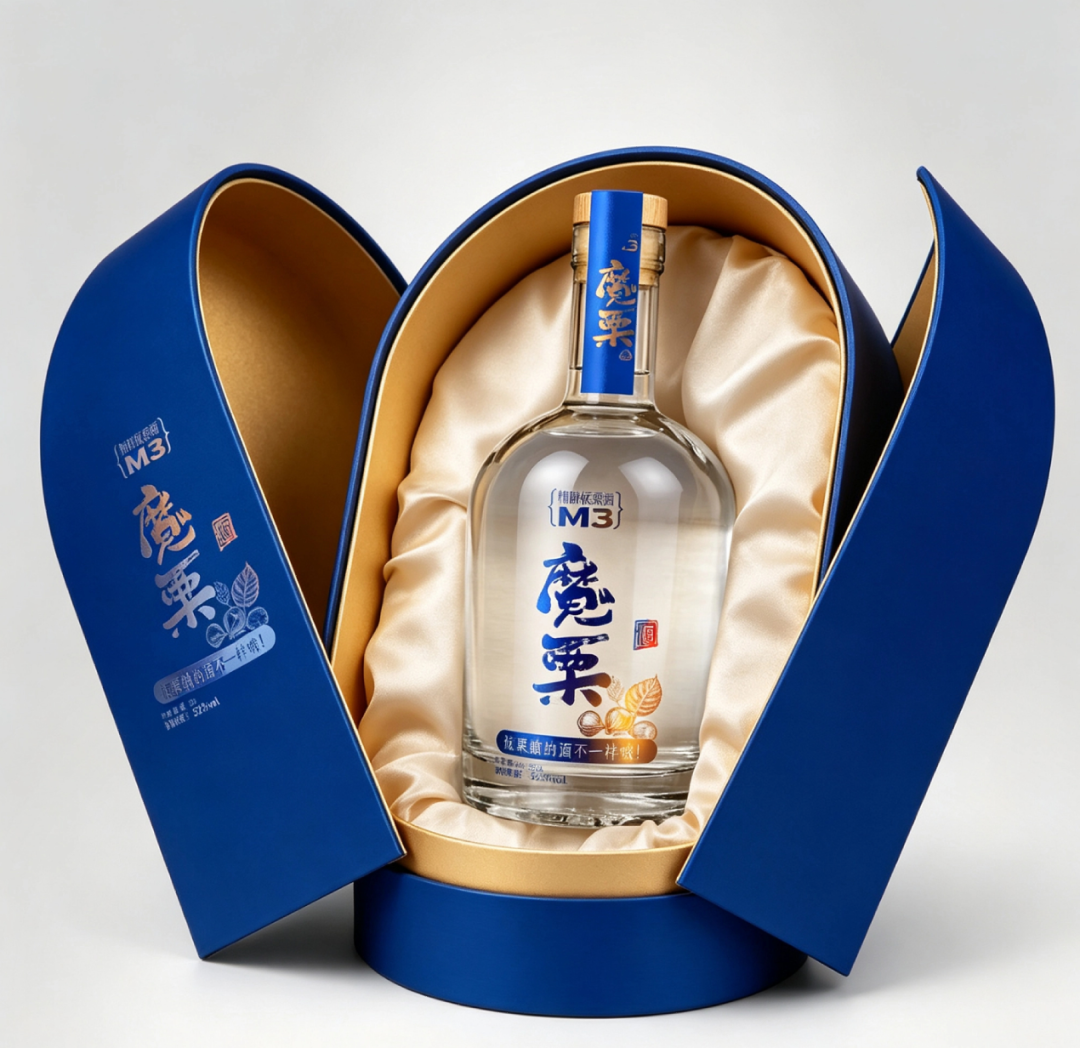
— Molì M3 - Bottle and Copy
Notice the tagline on the bottle: “板栗酿的果不一般味!”—“果不一般” is a pun on “果然不一般” (sure enough, it’s extraordinary). I read this copy several times, and the more I looked at it, the more brilliant it seemed.
Why is it brilliant? It turns the objective fact of “liquor brewed from chestnuts” into a catchphrase that’s “self-praising but not annoying.” Say “we use premium chestnuts and traditional brewing methods,” and consumers won’t remember it; say “brewed from chestnuts—sure enough, it’s extraordinary,” and they smile and remember it.
And the bottle is accented with gold calligraphy and a red seal, surrounded by leaf-and-fruit patterns—every detail reinforces the “chestnut” selling point, yet not a single line reads like dry instruction-manual text. The whole bottle is like a “chestnut-themed work of art.”
03
Step three: In context, it “gets young people” better than baijiu
What surprised me most about this case is the scene styling in its product photos—clean, modern backgrounds, soft lighting, highlighting the product’s premium texture.
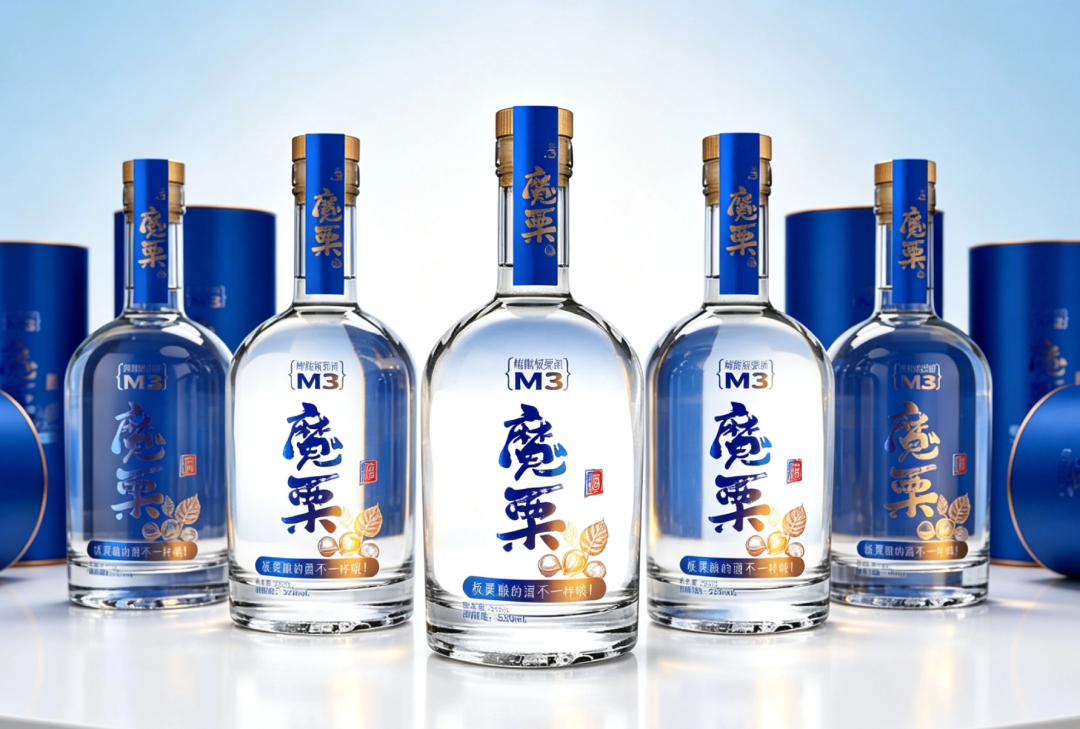
— Molì M3 - Modern Minimalist Setup
Look—no bright red ribbons, no dragon-and-phoenix stickers, no “for entertaining honored guests” slogans. The visual language it chooses is: a deep-blue metal gift box placed quietly in a modern space, light falling on it, like a still-life spread from a design magazine.
This “restraint” matters. Because young consumers’ needs around liquor have long since changed—they don’t want a bottle that “makes the elders feel it has face,” they want a bottle that “looks good when I photograph it and doesn’t look out of place in my living room.” Molì’s packaging happens to satisfy this need for “self-pleasing”: I buy it not because my dad likes to drink it, but because it’s good-looking, interesting, and worthy of my life.
04
A few honest words
Molì’s packaging gives every “regional specialty liquor” a reference answer: you don’t have to make only “local specialty produce”—you can also make “premium.”
The key is just two steps: first, visually break away from “rustic symbols” and use universal premium language like metal, deep blue, and gold; second, in the copy, turn the category selling point into a catchy hook (“sure enough, it’s extraordinary”) that consumers are willing to say out loud themselves.
If chestnut liquor can do this, so can other specialty farm-produce liquors. Don’t let your product lose out on “not looking premium enough.” (Content generated by AI, for reference only)
Sanyao Packaging
Good packaging speaks
About This Case: Quick Answers
How does a product actually get "seen" on the shelf?
Consumers give you only three seconds in front of the shelf. The most reliable approach is to design in two layers: from three meters away, grab attention with color and shape; within one meter, stop people with information and cultural trust signals. The root cause of most products not selling isn't that they're bad—it's that the "good" never gets shouted out from three meters away.
Can this "Moli" approach work for my baijiu product too?
Yes. This logic isn't picky about category—as long as your product looks similar to everyone else on the shelf and consumers can't recognize you in three seconds, it works. When it comes to execution, we'll define the plan anew based on your category, channel, and price band, rather than forcing someone else's face onto yours.
If I hire you for baijiu packaging, how do you usually charge, and how long does it take?
We charge per project, depending on category complexity, the number of series, and whether prototyping and extensions are included. Typically 2–4 weeks: the first week sets direction and positioning, the second week delivers concepts, and the third and fourth weeks deepen, prototype, and finalize. Rush timelines can be compressed, but we recommend leaving time for physical prototyping. Send us your materials for a free diagnosis first, then we'll quote.
We're based elsewhere—can we collaborate online?
Yes. Many of our projects are remote collaborations: materials coordinated online, concepts reviewed in the cloud, prototypes shipped by courier. There are no geographic limits—we work with clients nationwide.
CommentsBe kind, communicate rationally