
Understand It in One Graphic: What Is the Essence of Packaging Design? (A Must-Save Guide)
Packaging is not a cost—it's pricing power. Six chapters, from clay jars to the shelf, explaining the essence of packaging design inside and out.
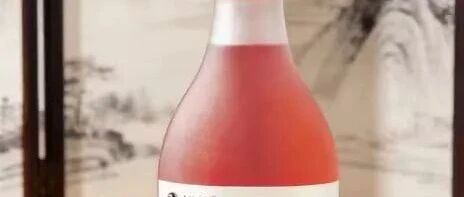
From commodity to currency is a perilous leap — Marx’s line still holds true on today’s shelves.
For a product to complete the leap of “being purchased,” it must let buyers see it on the shelf, understand it, and believe in it. And all of this happens almost entirely at the moment the packaging is finished.
So what is packaging design? And what is its essence?
01
01 The Birth and Evolution of Packaging
Thousands of years ago, people stored water in clay pots and grain in bamboo baskets. That was packaging in its earliest form — hold it all, don’t spill, and that was enough.
Once commerce emerged, packaging began to grow a mouth. Sauce workshops carved their shop names into clay jars, apothecaries stamped their seals on paper packets, tea merchants branded their origins onto wooden crates. For the first time, packaging turned from a “container” into a “token of trust”: it told strangers who made this jar of goods, and whether it was worth believing in.
The Industrial Revolution rewrote packaging’s fate. Assembly lines turned products into standardized commodities, and packaging became standardized along with them — it no longer just held things; it had to hold “identity.”
The real transformation came with the arrival of the supermarket shelf. For the first time, products lost the salesperson’s voice and could only speak for themselves through packaging. Western marketing thus gave packaging a definition still in use today: the silent salesman.
Today, packaging is far more than a salesman. It is the first meeting between a brand and its consumer, the material for social media posts, and the first impression that decides whether something is “worth this price.”
02
02 The Five Stages of Chinese Product Packaging
The evolution of packaging is the evolution of how goods are traded in China.
The planned-economy era: rationed supply — grain coupons for grain, cloth coupons for cloth. Goods were produced and distributed according to plan, and packaging bore only the most basic function — don’t scatter, don’t leak. That generation didn’t fuss over whether packaging looked good, because being able to buy it at all was already lucky.
The production era (1980s): goods were scarce, and distributors queued overnight to grab stock. In this era, getting the goods mattered more than choosing them, and no one cared whether the packaging was good or bad.
The product era: production scale grew, and people began to care about quality. In 1985, Zhang Ruimin smashed refrigerators — what he smashed into being was Chinese enterprises’ quality consciousness; packaging advanced along with it — materials became more considered, printing more careful.
The sales era (mid-to-late 1990s): competition emerged, and the channel was king. Wahaha pushed its products into the deepest terminals nationwide through its “distributor alliance,” while P&G and Coca-Cola brought FMCG shelf management. In this stage, packaging became a “terminal weapon” for the first time: whoever stood out more on the shelf sold one more case.
The marketing era (post-2000): companies began studying customer needs, and brand building became a consensus. Packaging was no longer “the box that holds the product” but part of brand strategy — color, typeface, material, every detail speaking to the target audience.
The customer-centric era (post-2010): putting the customer at the center became a corporate consensus. Online platforms rolled out “return if unsatisfied,” and Pinduoduo even went as far as “refund only”; offline packaging evolved too — people no longer buy only products that “work,” but experiences that are “good-looking, easy to carry, and worth posting.” Looks are justice, and packaging is the first carrier of those looks.
The social-marketing mindset: environmental issues entered packaging — recyclable materials, plastic-reduction design, FSC-certified paper. Global flexible-packaging giant Tetra Pak partnered with Aihuishou to recycle packaging. Packaging must serve not only transactions but also the planet.
03
03 The Evolving Definition of Modern Packaging Design
The definition of packaging has grown broader with each era.
The original definition: packaging is a container for protecting, storing, and transporting products. In this definition, packaging is “an appendage of the thing.”
The 4P era: marketing authority McCarthy proposed the 4Ps — product, price, place, promotion. Packaging spans two Ps at once: it is part of the product and also a vehicle for promotion. For the first time, packaging entered the coordinate system of marketing.
Today’s definition: packaging is the first dialogue between a brand and its consumer, a system for visualizing value — drawing out the invisible craftsmanship, ingredients, and brand character in a way that’s understood at a glance.
From “packaging” to “packaging design”: packaging belongs to the thing; packaging design belongs to the people. The former answers “how to pack it,” the latter answers “why buy it.” One word’s difference is the leap from a “cost mindset” to a “value mindset.”
04
04 What Is the Essence of Packaging Design
To see the essence of packaging design clearly, first look at how it differs from the old mindset.
Old mindset: enterprise-centered. I put the product in a bottle; buy it or don’t. Packaging is a cost — save a penny wherever you can.
New mindset: customer-centered. First study why consumers pay, then decide what the bottle looks like. Packaging turns from a “cost item” into an “investment item.”
The essence of packaging design is service.
It serves the consumer’s understanding — letting customers grasp at a glance what this is and what’s good about it;
It serves the brand’s premium — making customers willing to believe it’s worth this price;
It serves the efficiency of the transaction — saving the salesperson ten sentences and the terminal owner a good deal of talking.
“Altruism first” in packaging design works just like marketing: first let customers “understand it, trust it, and be proud to bring it out,” and the brand’s money follows naturally.
As the old saying goes, “no pointed measure, no merchant” — the rice seller fills the measure to the brim and adds an extra scoop so it mounds up, earning lasting trust.
Packaging is that “mounded-up” sincerity in modern commerce.
05
05 A Case Study: Qinghe Yangmei Fruit Wine
With the theory done, let’s look at a real case.
A yangmei fruit wine, purely fermented from Dongkui yangmei. The wine was good, but it sat on the shelf for just twenty-some yuan a bottle — and you still had to smile and coax buyers.
Where was the problem? In “no one believing it was worth more.”
We gave it a “plain” new outfit: a matte off-white base, two large brush-written characters for “yangmei,” a line-drawn white crane, a single red seal — and nothing else added.
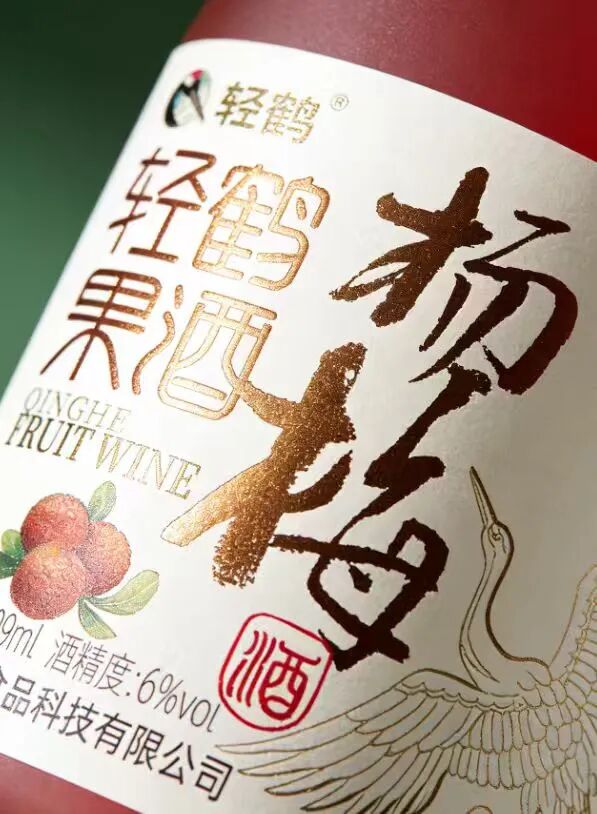
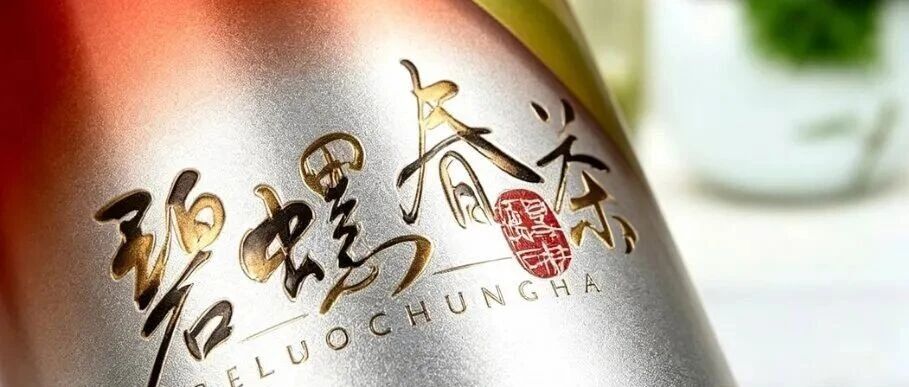
— Close-up of the foil-stamped “yangmei” calligraphy, highlights on the matte base
This design is “serving” at every turn:
Brush calligraphy “yangmei” — serves category recognition. One stroke says it all: “this is yangmei wine,” more directly than any adjective;
The line-drawn white crane — serves brand memory. Can’t remember the brand name? No matter — just remember that crane;
The red seal — serves cultural identity. New Chinese style, with refinement, with provenance;
Foil stamping + spot UV — serves the value signal. Those two gold characters on the matte base light up under counter lighting on their own, visible from two shelves away.
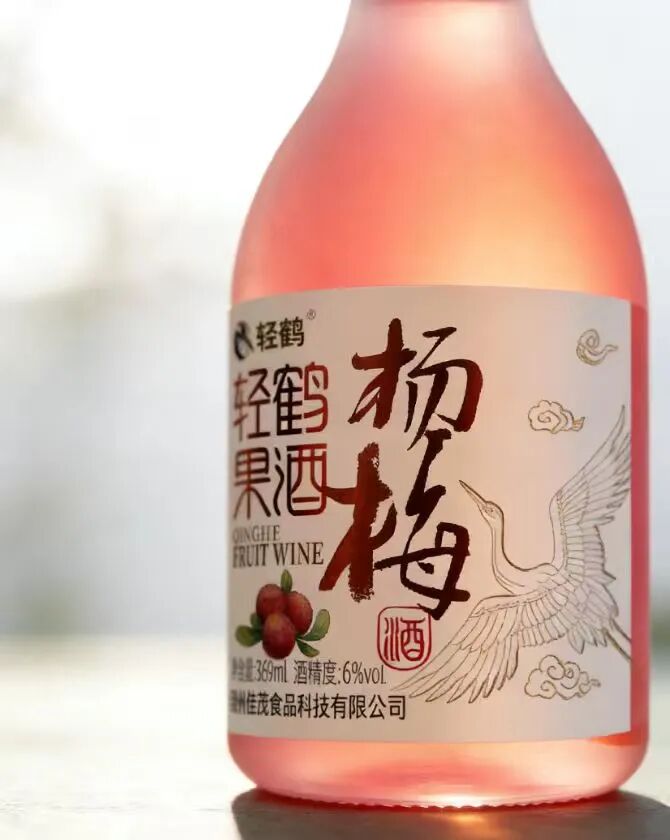
— Label detail on the bottle, the full composition of calligraphy and crane
Result: retail price more than doubled, and the channel moved from mom-and-pop shops into boutique supermarkets. When salespeople visit stores, they used to spend ages explaining “how we’re different from the shop next door”; now they just set the bottle on the table — no need to say much at all.
Do the math: less than one yuan more per bottle, and the selling price more than doubles.
Where did that one yuan go? Into making customers “willing to believe it’s worth this price.”
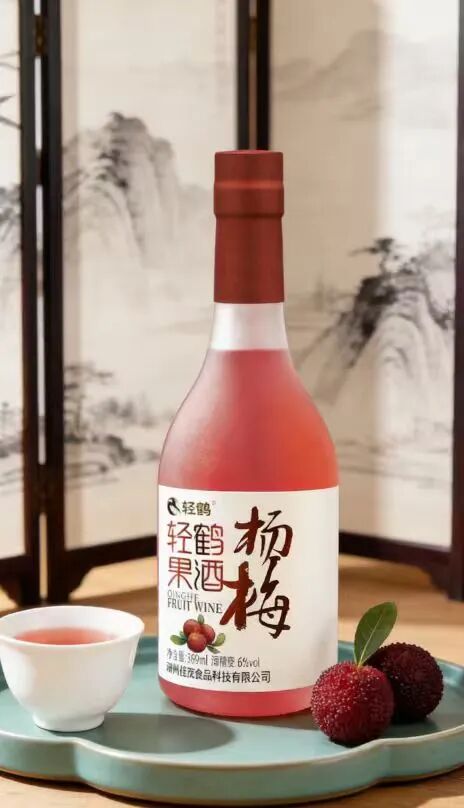
— Full product view, the pink wine echoing the understated label
This is the essence of packaging design — it is not a cost, it is pricing power. Skimp on it as an expense, and it will be clawed back out of your selling price.
06
06 The Foundation of Packaging Design
Packaging design is not dressing a product; it is speaking the first sentence to the consumer on the brand’s behalf.
Great design is always altruistic first: let customers understand it, trust it, and be proud to bring it out; let the terminal sell it easily; let the boss sleep at night. Do altruism well, and self-interest follows naturally.
From clay pots to shelves, from “holds it all” to “sells it well,” packaging has traveled thousands of years. What changes is generations of materials and craft; what never changes is one iron rule:
Packaging that wholeheartedly serves the customer succeeds everywhere.
(Content polished by AI, combining Sanyao’s learning and experience, to explore and learn together with you, dear readers. AI is our most efficient learning tool — for reference only.)
Sanyao Packaging
Good packaging speaks.
About This Case: Quick Answers
Can packaging really help me sell at a higher price?
Yes, but only if it spells out for you exactly "why it's worth this price." Packaging doesn't determine cost—it determines price perception. If consumers feel you're worth more within three seconds, a higher price and profit margin can hold up.
Can the product approach discussed in this article work for my product too?
Yes. This logic isn't picky about category—as long as your product sits on the shelf looking much like everyone else's and consumers can't recognize you in three seconds, it works. When it comes to execution, we'll redefine the plan based on your category, channel, and price band rather than forcing someone else's face onto yours.
If I hire you for product packaging, how do you usually charge, and how long does it take?
We charge per project, depending on category complexity, the number of series, and whether prototyping and extensions are included. Typically 2–4 weeks: the first week sets direction and positioning, the second week delivers concepts, and the third and fourth weeks deepen, prototype, and finalize. Rush jobs can be compressed, but we recommend leaving time for physical prototyping. Send us your materials for a free diagnosis first, then we'll quote.
We're in another city—can we collaborate online?
Yes. Many of our projects are remote collaborations: materials coordinated online, concepts reviewed in the cloud, and prototypes shipped by courier—no geographic limits, and we work with clients nationwide.
CommentsBe kind, communicate rationally