
A bottle of da gao liang liquor that hasn't even launched yet: how can packaging help small and mid-sized distilleries pry open a crack?
Using a proposal for an unlaunched da gao liang liquor, we break down the three things small and mid-sized liquor companies rely on packaging to break through: stating their identity clearly, building trust, and controlling costs.
Having worked in packaging design for many years, today I want to use a da gao liang liquor that hasn’t launched yet as an example to break down a very practical matter with distillery owners: small distilleries’ products aren’t bad, so why do they always lose out to the big brands? And can packaging help on “price perception,” snatching a bite to eat from the big brands’ mouths?
I know some distillery owners, and their liquor is genuinely good. Northeastern sorghum, solid-state pure-grain fermentation, the craft of old masters—these foundations are all solid. But most owners don’t have the time to explain clearly what makes their liquor good—the ingredients, the craft, the old flavor, the regional story all pile up in their heads, and on the packaging all that’s left is a few gold-stamped characters plus a line like “cellared for thirty years.” Customers pick it up, can’t understand it, and don’t trust it, so they turn around and buy the flashy big brands instead.
To put it plainly, many small and mid-sized distilleries’ products aren’t low-end at all.
“
Baijiu industry concentration keeps rising
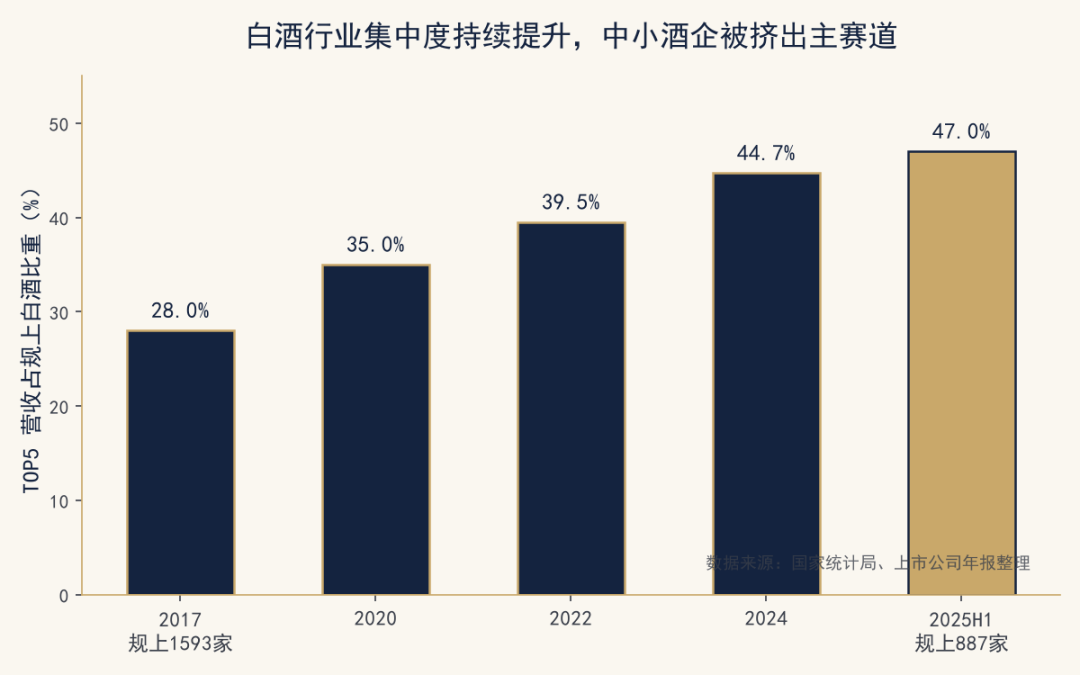
I’m not making this up. The baijiu industry has been playing “big fish eats small fish” for years now: in 2017 there were still 1,593 above-scale baijiu enterprises, and by the first half of 2025 only 887 remained; the TOP5’s revenue share rose from 35% in 2020 to 47% in the first half of 2025.
What does that mean? Small and mid-sized liquor companies aren’t losing because their liquor is bad—they’re losing because they “can’t clearly say who they are.”
So where’s the opportunity to break through?

Breakthrough direction: the vast Northeastern granary
In my view, small and mid-sized distilleries can’t compete with big brands on history, advertising, or channels. And packaging is the simplest and cheapest opening to that story.
Three things for small and mid-sized liquor companies’ packaging breakthrough
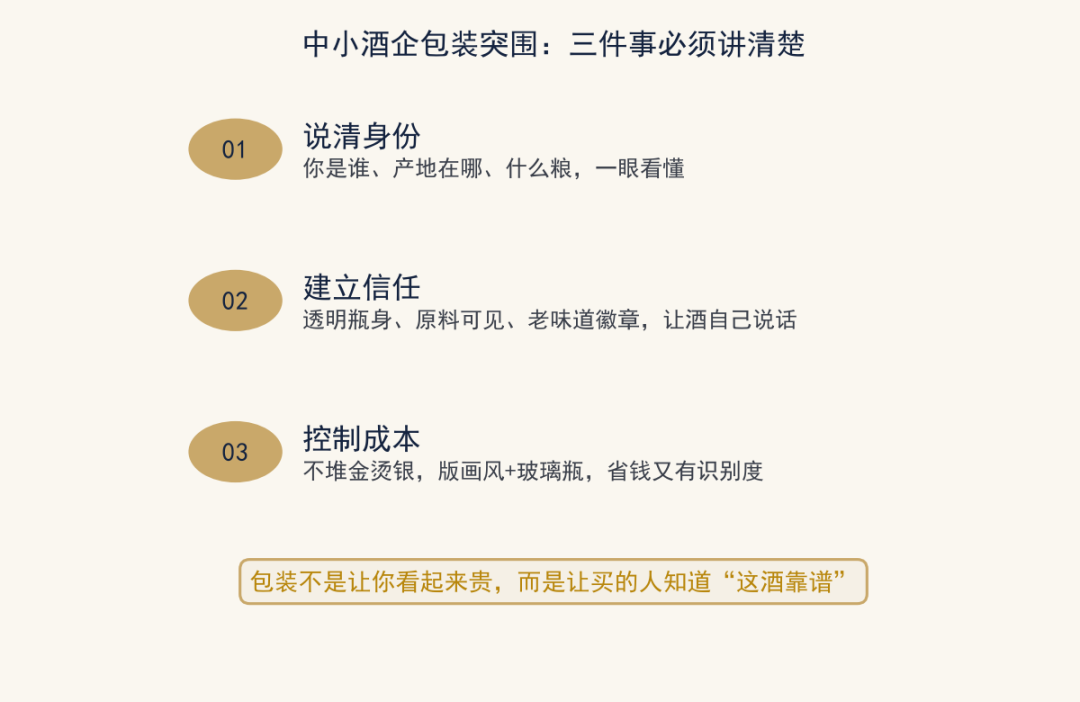
What packaging needs to do is really just three things—
Who you are, where it’s made, what grain it uses—let people understand at a glance. Don’t write slogans no one can remember.
Don’t be secretive; if the liquor body is clean, show it; if the ingredients are good, draw them. A transparent bottle, a sorghum illustration, an old-flavor badge—all let the liquor speak for itself.
Small distilleries don’t have the money to pile on gold and silver, so use a printmaking style, glass bottles, and strong recognition. Saving money isn’t about cutting corners on design—it’s about cutting the processes you shouldn’t be spending on.
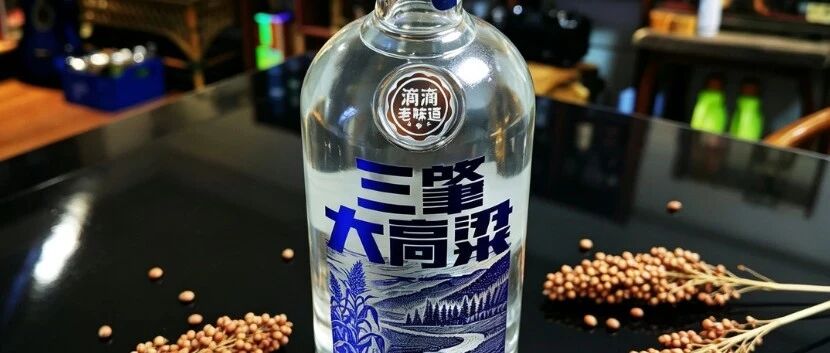
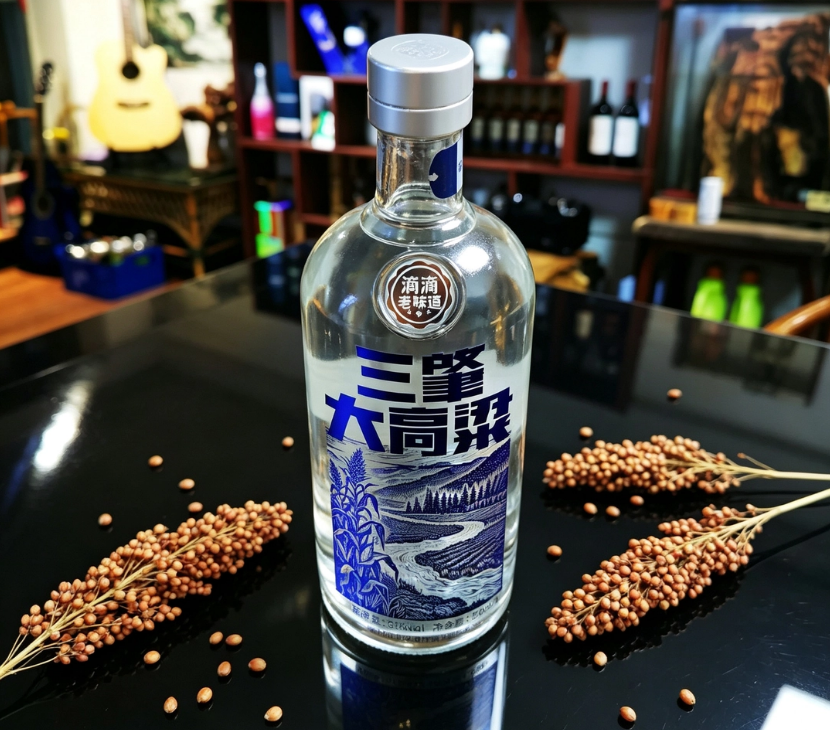
Today’s proposal is a Northeastern da gao liang liquor I recently came across, called “Sanzhao Da Gao Liang,” not yet launched.
Look at its packaging: a transparent glass bottle, a silver cap, a blue-and-white printmaking-style label. On the label a stalk of sorghum stands beside the black soil, with a river and fields in the distance, the lines clean and crisp.
This is the best annotation of those four words, “state your identity clearly.”
Old flavor settled over time
Right in the center of the bottle is a round badge reading “every drop an old flavor.” These five characters seem ordinary, but they actually point a way forward for small and mid-sized distilleries—. Old flavor isn’t about years of history; it’s a taste memory, that particular kick locals have been drinking for decades.
Now let’s look at the shelf effect.
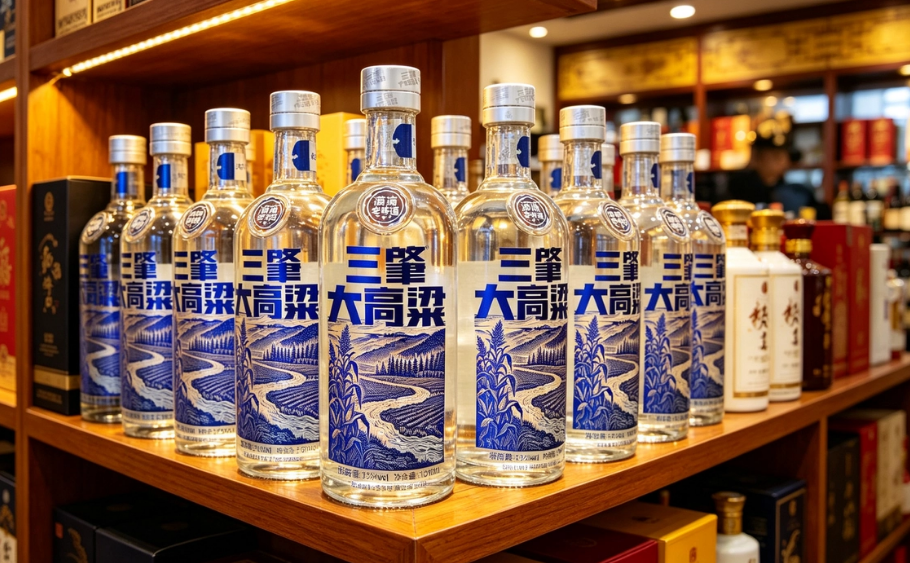
Shelf array image
With a row of bottles lined up, the blue-and-white labels really pop on the tobacco-and-liquor shelf. The red and gold gift boxes beside them get tiring after you’ve seen too many; it’s this clean printmaking style that catches the eye more easily.

Pure-grain origin and terroir
I know some owners will worry: won’t this kind of “plain” packaging look cheap?
Quite the opposite. Today’s young consumers and lower-tier markets long ago stopped buying the “glittering gold = good liquor” routine. What they want is—a transparent liquor body, visible ingredients, a credible origin. The more you tell the story of “pure grain” through imagery, the more trust you sell.
“
Finally, three self-check questions for distillery owners:
If not, your packaging hasn’t fulfilled its duty of self-introduction.
The more tightly you cover things up, the more customers feel you have something to hide.
This is the hardest one. Sanzhao Da Gao Liang relies on blue-and-white printmaking + a transparent bottle + an old-flavor badge. What’s your memory point?
Good liquor is only the ticket in; being seen is the starting line.
“
These approaches have been proven on quite a few small distilleries by Sanyao. If your liquor is also stuck at “others can’t see what’s good about it,” the packaging stage is worth rethinking.
About This Case: Quick Answers
What can packaging do for small and mid-sized distilleries competing against big brands?
Packaging is the simplest and cheapest opening to the story. Small distilleries can't compete on history, advertising, or channels, but they can use packaging to make three things clear: who you are, where it's made, and what grain it uses—so people understand at a glance.
Why does "plain" packaging actually sell for more?
Because today's consumers no longer buy the "glittering gold = good liquor" routine. What they want is a transparent liquor body, visible ingredients, and a credible origin. The more you tell the story of "pure grain" through imagery, the more trust you sell—and trust is what holds up the price.
How should distilleries with limited budgets spend their money?
Saving money isn't about cutting corners on design—it's about cutting the processes you shouldn't be spending on. Use a printmaking style, glass bottles, and strong recognition instead of piling on gold and silver, and shift the budget to where it shows, like a transparent bottle, a sorghum illustration, and an old-flavor badge.
CommentsBe kind, communicate rationally